
How do you introduce a new cat, or cats, to your household?
Links in this blog post may be affiliate links in which I earn a commission — thank you so much for your support!
As a certified cat lady with six cats, I’m often asked, “How do they get along? How did you introduce them?” And the answer isn’t simple because, like people, all cats are different. I didn’t even get my first cat until my very early 20s, so my knowledge about them was pretty scarce to start with. I remember the VERY first time I encountered a litter box and had no idea how to properly scoop it, that’s how uninformed I was. I know for a fact that I didn’t introduce my first few cats to each other the right way, and have since researched and changed my methods.

Having acquired quite a few more cats over the last 13 years, I now feel a bit more properly equipped to offer advice on how best to introduce a new cat into your household. You’ll also find tips for introducing cats to one another, if you already have one or some in the house. Although I’m certainly not planning on adding any more cats to my family anytime soon, I do hope these tips are helpful to your and your new fur baby/babies.

No matter what your situation is, you’re going to want to set your new cat up in its own space to begin. A “home base” or “safe space” if you will. Whether that’s a spare bedroom or bathroom, you’ll want to include a litter box, food, water, a scratching post or floor scratcher, and a bed or cozy cave of some kind. Make sure this room doesn’t have any weird hidey-holes or nooks and crannies, as scared cats can truly get into the most insane places. When I moved into my new house a couple years ago, my cat Chihiro stuck herself under my dishwasher and I couldn’t find her for 14 hours. I cried so many tears. Thus, these tips also apply if you’re moving cats into a new house in general, too.
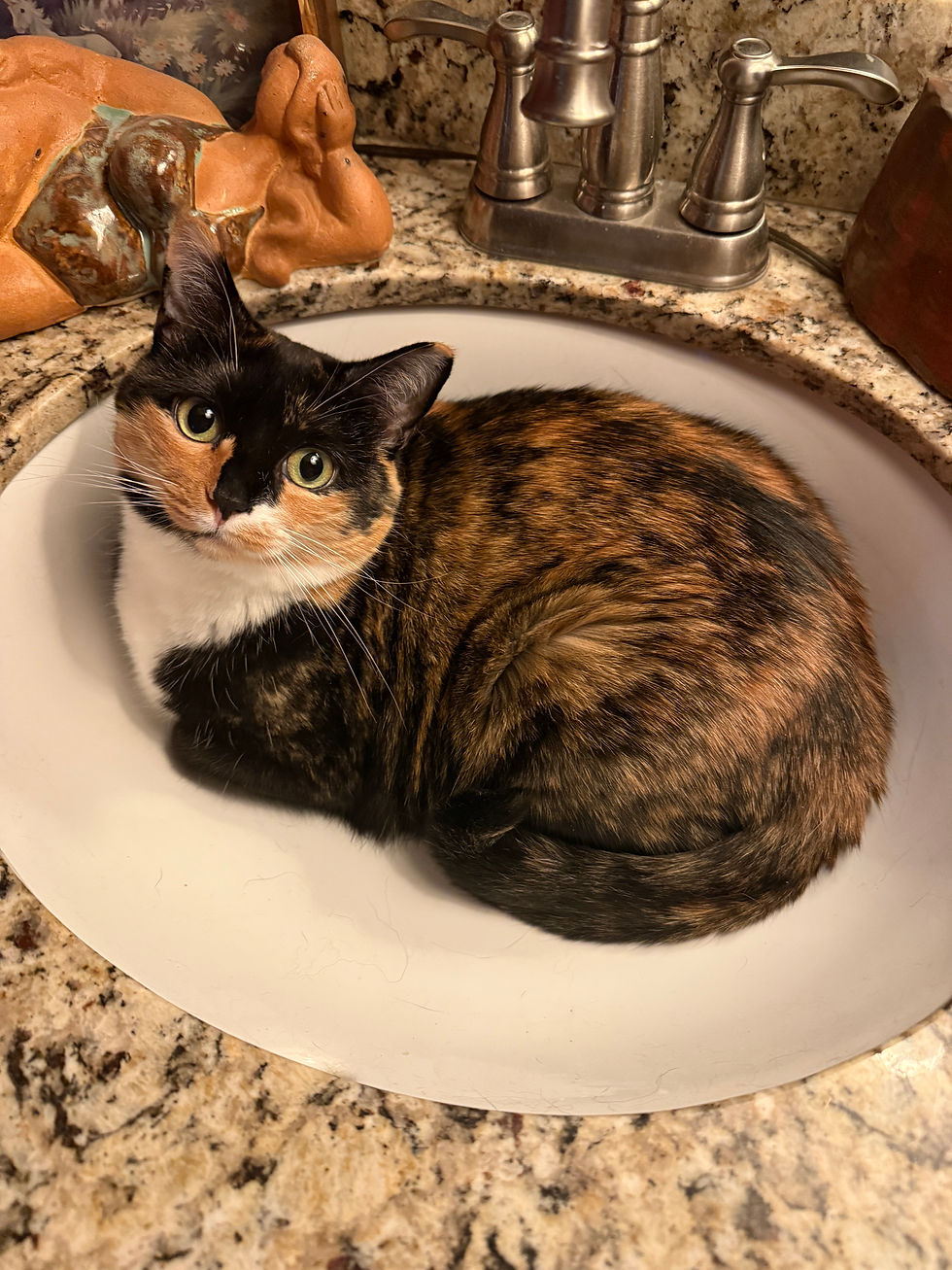
Change can be hard on cats, especially rescues, so giving them their own space allows them to start to explore their new environment safely, without it being too overwhelming. It is very common for cats to want to hide in their new space for hours, if not days, before they become comfortable. Even if they were super friendly in the shelter, don’t be discouraged.

With kitties, it’s best to keep in mind the 3-3-3 rule: 3 days to decompress in their new environment, 3 weeks to really settle in and learn routines, and 3 months to open up and show off their true personality. Once the cat is set up in their new space, you can always check on them whenever you want, you can even sit with them and talk to them calmly and slowly to build up trust. Make sure to consistently check on food and water, as well as give them treats for positive reinforcement, if they’ll eat them. Don’t forget the litter box! It must be scooped daily. Once a day minimum. If you, like me, are not a fan of scooping the litter box everyday, make sure to check out my blog post here on Litter Robots.

If you’re bringing home multiple cats, like a pair of kittens or a bonded pair, they will most likely warm up to their new space a bit quicker. I will always always always recommend that if you’re adopting a single kitten, to adopt a pair instead. They will be braver with a friend, and have each other to entertain themselves when you’re not around. A single kitten is actual chaos, I promise you. Don’t be afraid of adopting older cats either, a lot of them are just looking for a lap to nap on.

Many people believe cats are anti-social because of their independence, but that’s not really the case. A lot of cats love being around other cats, and people! However, introducing a new cat into an existing cat’s household can be tricky. Cats are extremely territorial, both male and female, and you really want to take care to introduce new cats to each other slowly.

This is another reason the new cat’s separate space is critically important. Your current cat will have the chance to begin to smell the new cat through the door, without seeing them. After a few days, you can then begin to “scent-swap,” which is when you take items that smell like one cat (like a towel or blanket) and introduce it to the other, and vice versa. Next, you’ll want to do feeding/treat time for the kitties on both sides of the door—this creates a positive association for each of them, a treat while experiencing the others’ scent. This entire process can take days or weeks, you just have to be patient and pay attention to your cats’ needs.

Once you’ve done all of this, it’s time to test the waters with visibility. You can use a baby gate, or open the door a crack between the new kitty’s safe space and rest of the house. Pay attention for signs of aggression like hissing, swatting, growling. While these reactions are totally normal, it’s best to try the meeting again later.

When you feel that both cats have acclimated to at least seeing each other, you’ll want to introduce them face-to-face in a neutral, closed-off room. I recommend having a friend or family member help during this process; but if you’re a single person like me, you can still do it solo. You’ll want to play with the cats and give them treats during this meeting, creating more positive associations. Distract them on opposite sides of the room so they don’t have time to focus too much on each other. Do this multiple times over a few days, bringing them closer together each time, and soon the cats will learn neither is a threat to the other.

If you feel like the process is taking longer than it should, or that maybe your cats are a bit spicier than you’d like, you should consider pheromone options like Feliway. Mimicking natural cat pheromones, Feliway is a plug-in wall diffuser that lasts for 30 days. It aims to calm cats and makes transitions like moving into a new house, or adding a new cat, a little bit easier. One diffuser works per 750 square feet and the refills last 30 days. Click here to check out Feliway options on Amazon.

Have you tried EVERYTHING and the cats are still not getting along? Please reach out to your vet or a feline behaviorist to see if something else is going on. They are the purr-fessionals after all.

By following these tips, introducing a new cat into your household should go fairly smoothly. Be patient with your new kitty because, as you know, being in a big new space can be really scary! It could take as little as a few days, or as many as a few weeks. Go at their pace, pay attention to their body language, and respect the needs of your existing cat(s) too. You’ll have a cute and comfortable new addition to your house in no time!


In the end, it’s this balance that makes the difference a socially prepared paired sphynx cat with the right environment and stimulation